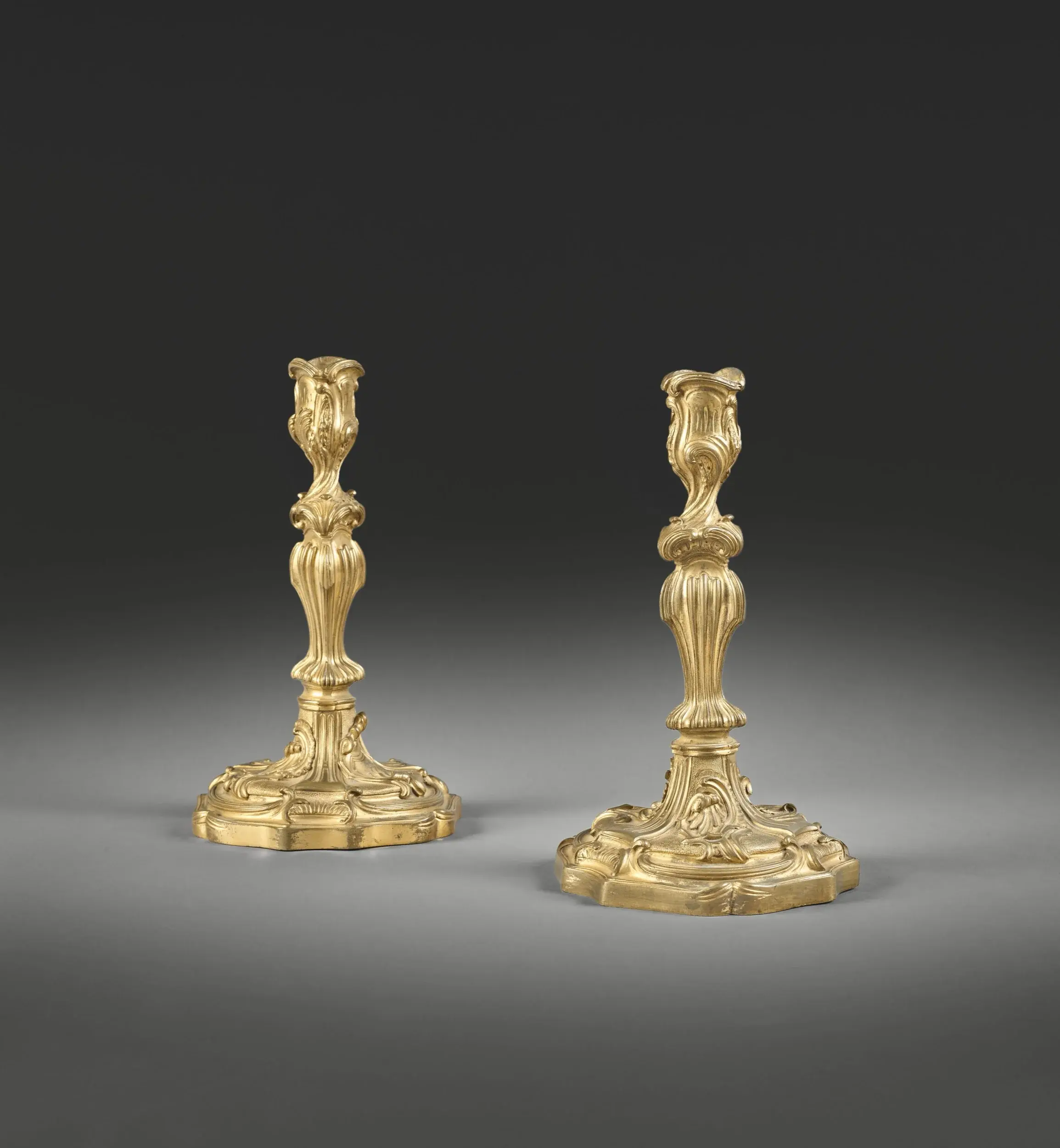
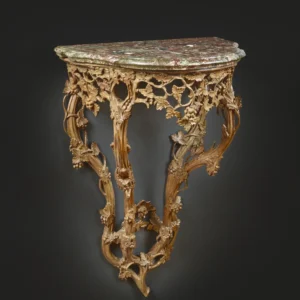
The elegant rocaille swirl
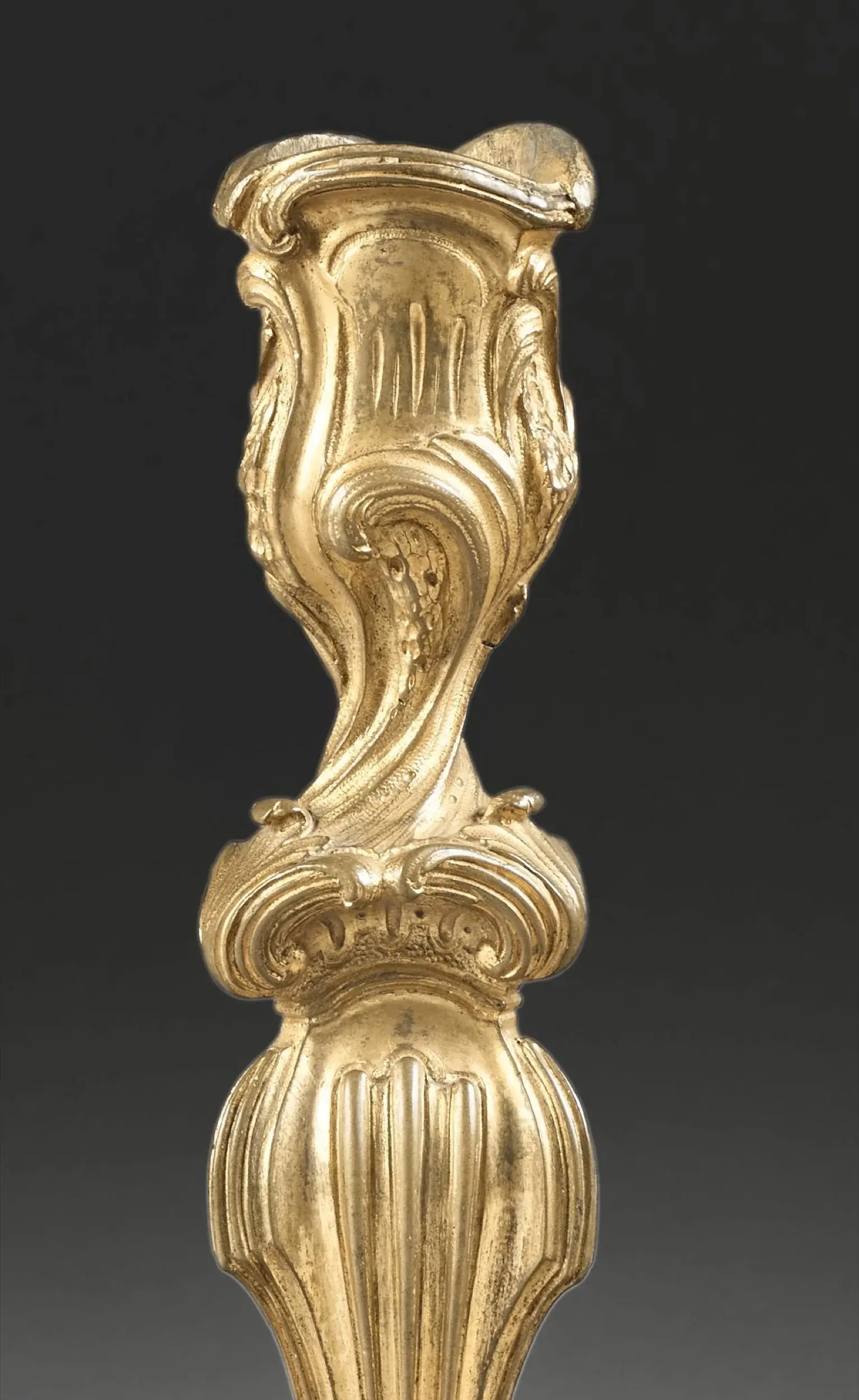
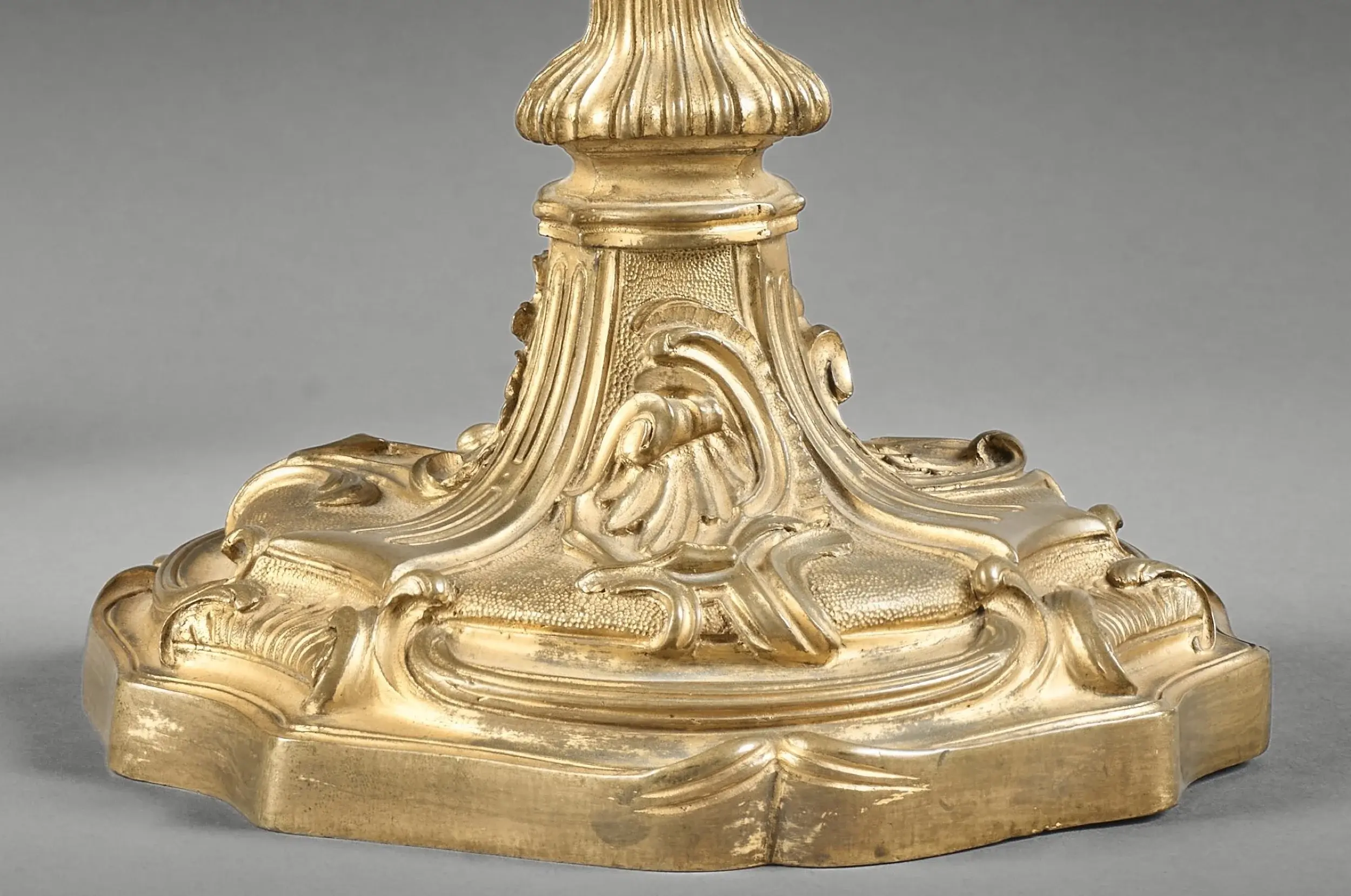
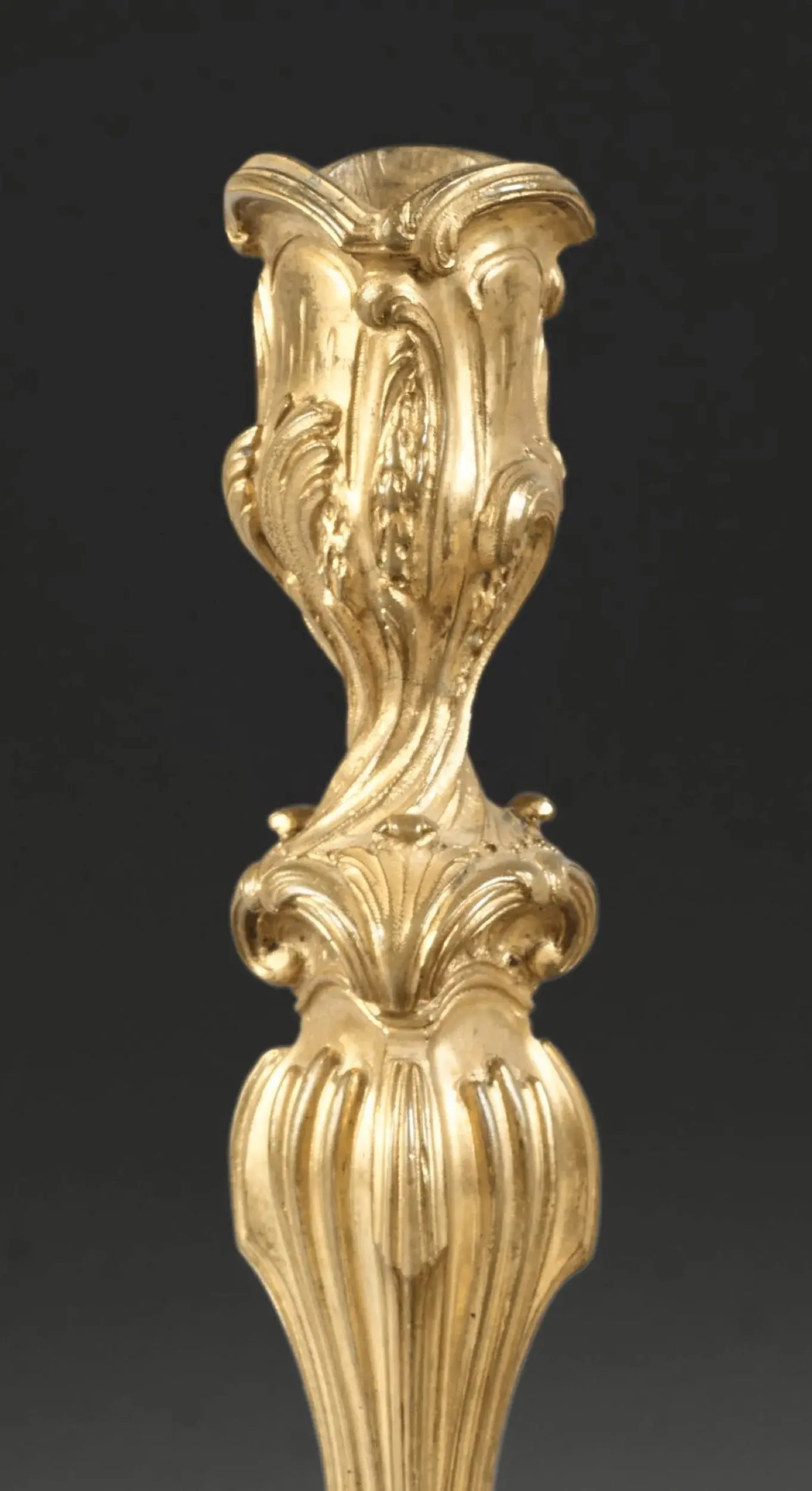
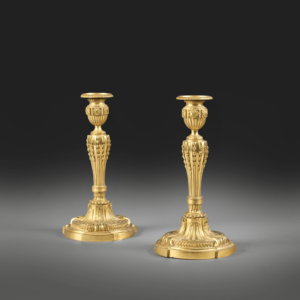
Ormolu candlesticks proliferated in the first decades of the 18th century. Intended to be used in pairs on mantels, tables, desks, chests of drawers, etc., their shapes, designed to be viewed from different angles, are the ideal vehicle for rocaille experiments with swirling forms animated by asymmetrical curves, as well as ornaments derived from the plant and marine world. Scrolls and palmettes stretch gracefully along the surfaces, swirling around silhouettes populated by shells and flowers in a graceful, serene movement far removed from the rococo bustle too quickly associated with rocaille.
The asymmetry of rocaille compositions is in fact perfectly controlled. In goldsmiths' and silversmiths' work, the central part culminates in a widening base, guiding the eye vertically up to the upper part, with a play of undulating curves and counter-curves in which the decorations continue.